- Sebak سَبَق
- The daily lesson: the new portion a student learns and recites to the teacher. In South Asia, sabaq. Also the name of this App.
- Sabqi and manzil
- In the South Asian tradition, the revision that goes with each new sabaq: sabqi for the lessons of the last days, manzil for a longer portion of everything learned before.
- Elifba
- The Arabic alphabet, named after its first letters, and the primer every Quran student starts with.
- Hafız
- Turkish for hafiz: someone who has learned the whole Quran by heart.
- Hatim
- Completing a reading of the whole Quran, and the gathering that celebrates it.
- Ijazah إِجَازَة
- In Turkish icazet: a teacher's licence to recite and teach, naming the chain of teachers before them.
- Tilawa
- Recitation of the Quran aloud. Sebak chooses its recitation for correct tilawa.
- Tajwid
- The rules for pronouncing the Quran correctly: how each letter is formed, lengthened or joined.
- Murattal
- A calm, measured style of recitation, clear enough to follow word by word. Al-Husary's murattal is the recitation in Sebak.
- Mushaf
- A written copy of the Quran.
- Uthmani script
- The spelling of the Quran's text that follows the early written copies. Sebak shows the Tanzil Uthmani text.
- Translation of the meanings
- In Turkish meal. A translation conveys the meanings of the Quran; it is not the Quran itself. Every translation in Sebak is quoted with its translator and version.
- Surah and ayah
- A chapter of the Quran, and one of its verses.
- Oya
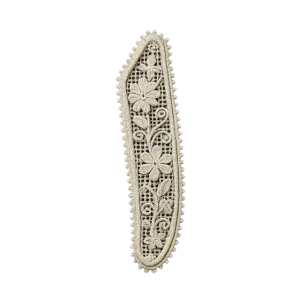
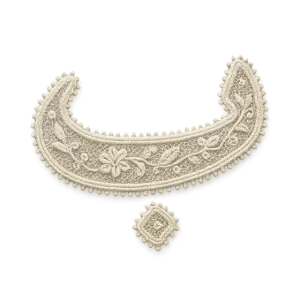
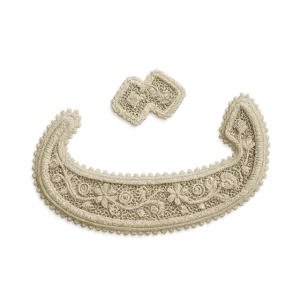
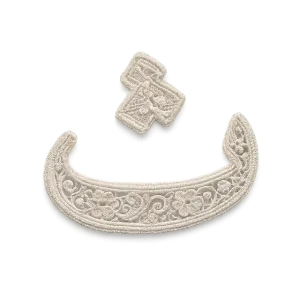
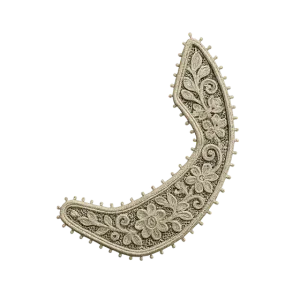
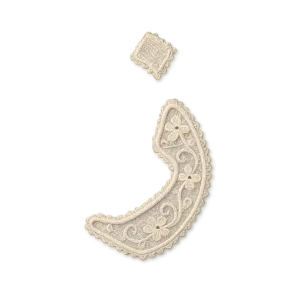
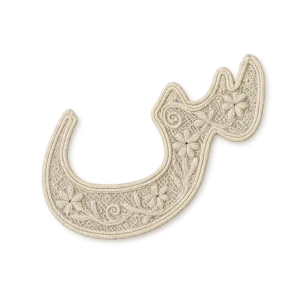
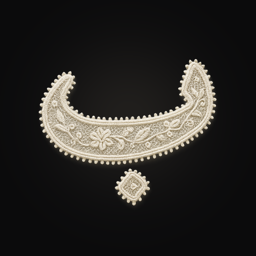
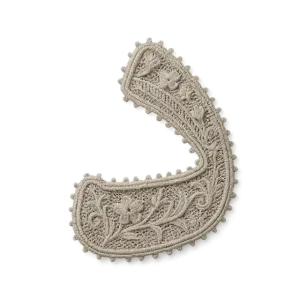
- Turkish needle lace. The lace letters of Sebak, ivory on black velvet, are made in its image.
 Sebak
Sebak
Glossary
The words of the lesson
The words teachers and students have used for centuries, and the ones you will meet in Sebak.